Effective breakroom planning goes beyond adding a few vending machines or a coffee station. Today’s workplaces rely on thoughtfully designed breakrooms to support employee satisfaction, productivity, and daily convenience.
When a breakroom is designed well, employees use it consistently. When it’s not, they leave the building for food, skip breaks, or disengage from the space entirely.
Start with How Employees Use the Space
Before considering equipment or layout, it’s important to understand how employees interact with the breakroom throughout the day. Usage patterns will shape everything from layout to product selection.
Consider:
- Peak break times and traffic flow
- Number of employees using the space
- Length of breaks and shift schedules
- Whether employees stay on-site or leave for food
A breakroom designed around real behavior will always perform better than one based on assumptions.
Design for Flow and Accessibility
A well-planned breakroom should feel easy to navigate, even during busy periods. Layout plays a critical role in whether employees choose to use the space.
Key layout considerations include:
- Clear pathways between vending, coffee, and seating areas
- Enough space to prevent crowding during peak times
- Logical placement of equipment based on usage
- Easy access to snacks, beverages, and payment areas
When employees can move through the space efficiently, usage naturally increases.
Offer the Right Mix of Employee Amenities
Abreakroom should support a range of needs, from quick snacks to full breaks. The right combination of employee amenities creates a more complete experience.
Many workplaces include:
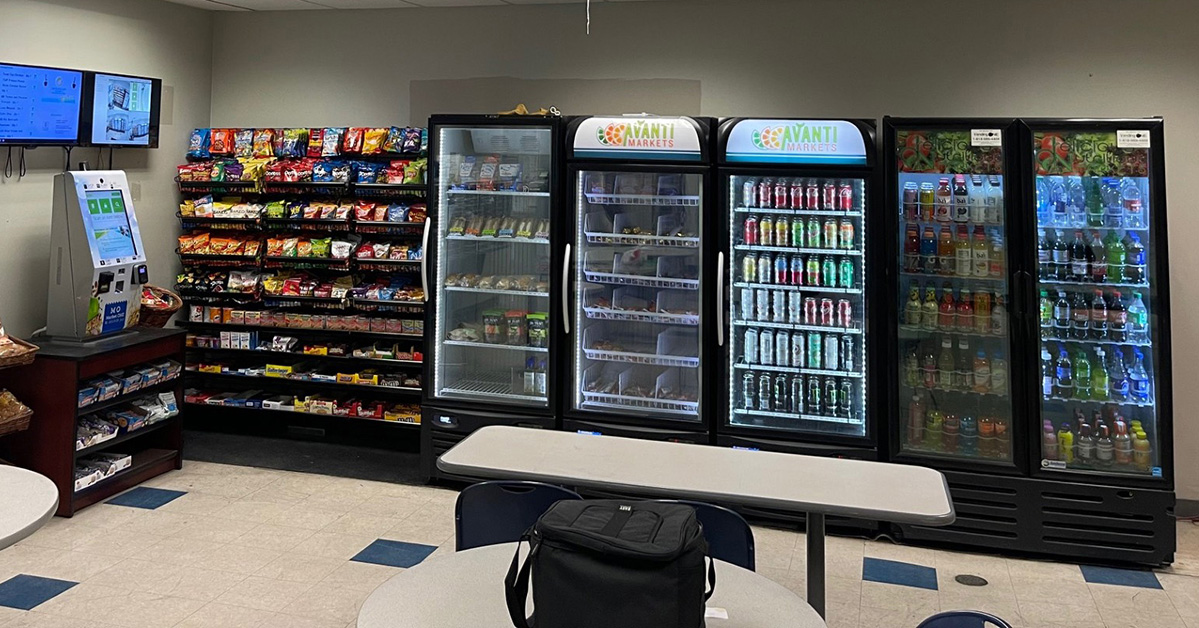
- Vending machines for quick, convenient access
- Micro markets for expanded food and fresh options
- Office coffee service for daily routines
- Water filtration and hydration stations
A balanced mix ensures the breakroom works for different preferences and schedules.
Stock Based on Real Demand
Even a well-designed breakroom won’t succeed if product selection doesn’t match employee preferences. Stocking should reflect what employees want, not just what’s traditionally offered.
Effective stocking strategies include:
- Rotating snack selections to keep options fresh
- Including healthier alternatives alongside popular brands
- Adjusting inventory based on usage patterns
- Responding to employee feedback
Consistent availability of preferred items keeps employees coming back.
Keep the Space Clean and Consistent
Cleanliness and maintenance directly impact whether employees use the breakroom. A well-maintained space signals that the company values the environment and the people using it.
Important factors include:
- Regular cleaning of equipment and surfaces
- Organized product displays
- Properly functioning machines
- Reliable restocking schedules
Consistency builds trust and encourages repeat use.
Plan for Growth and Flexibility
Workplace needs change over time, and breakrooms should be able to adapt. Planning for flexibility helps avoid the need for frequent redesigns.
Consider:
- Scalable vending and micro market options
- Space for additional equipment if demand increases
- Solutions that can evolve with workforce size
A flexible approach ensures your breakroom continues to meet employee needs as your organization grows.
Turning Breakroom Planning into a Better Experience
Strong breakroom planning creates a space employees want to use. By focusing on layout, product selection, and consistency, workplaces can transform the breakroom into a valuable part of the employee experience.
If you’re evaluating how to improve your current setup, small adjustments can make a significant difference.
Contact Coastal Refreshments to explore breakroom solutions tailored to your workplace.